
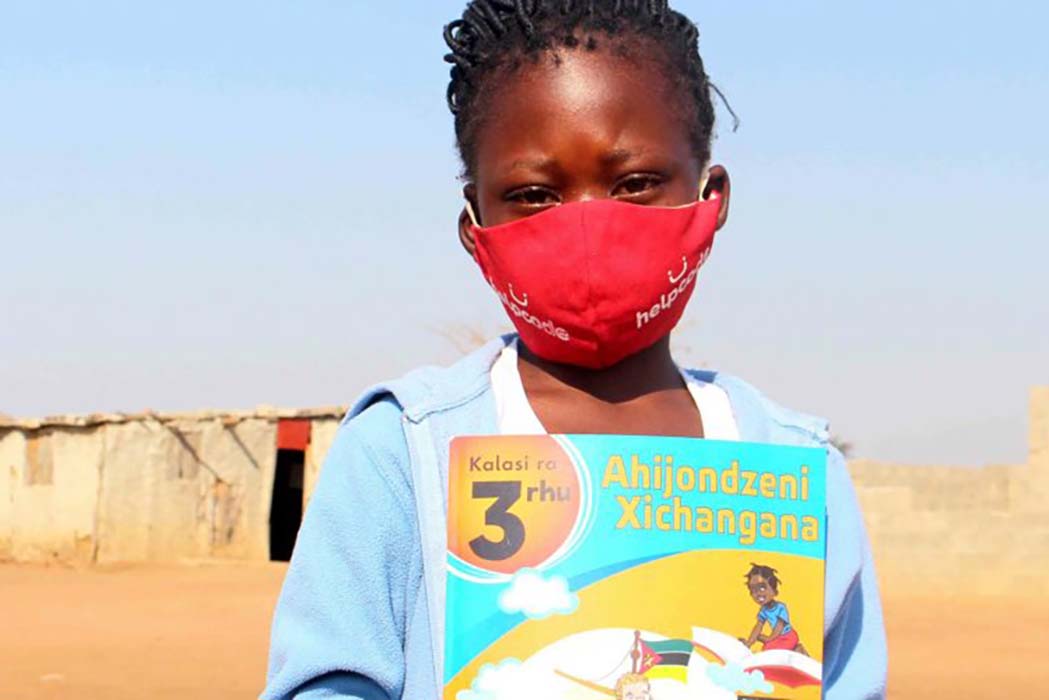
Without students in elementary school because of the new coronavirus pandemic, the School Feeding Project “Food for Knowledge” celebrates today, September 8, the World Literacy Day by broadcasting the Bilingual Teaching classes via radio.
The World Literacy Day is celebrated on September 8 of each year.
The learning of reading and writing is directly related to the development of a country and, to a great extent, contributes to improve the quality of life in society. That is why, with the purpose of promoting literacy in the various countries, the United Nations (UN) and the United Nations Educational, Scientific and Cultural Organization (UNESCO) established this date in 1967.
ADPP Mozambique, in partnership with Planet Aid and the Ministry of Education and Human Development, through the School Feeding Project, embraces the same cause, implementing the literacy component with the use of local languages (Changana and Rhonga), in 133 schools in the 4 districts of Maputo Province, namely Manhiça, Magude, Moamba and Matutuine.
To ensure the quality of the teaching and learning process more than 40 book titles were produced in Changana and Rhonga for the reinforcement of reading and writing and trained about 557 teachers and 391 elementary school managers. This process involved more than 29,000 students.
At this time, the Literacy process, despite the OVID-19 pandemic, continues through radio and television classes.