
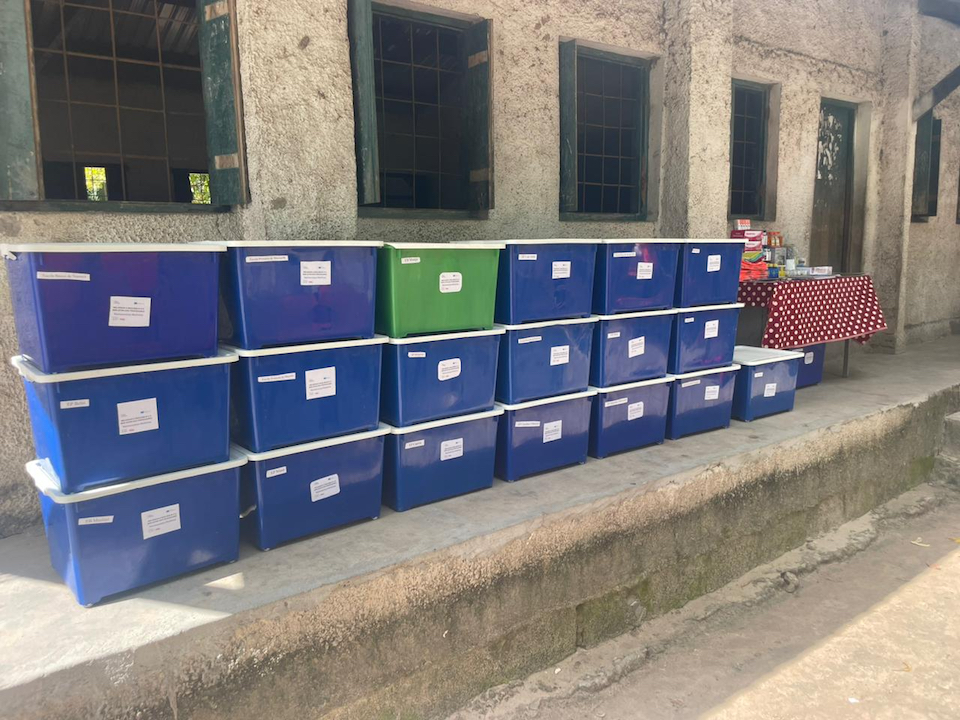
As part of efforts to strengthen schools’ capacity to prevent and respond to natural disaster risks, the project “Strengthening the Resilience and Well-being of Teachers in Areas at Risk of Natural Disasters,” funded by the European Union through Expertise France and implemented by ADPP Mozambique, delivered 60 emergency kits to an equal number of School Disaster Risk Management Committees (SDRMCs) operating in the districts of Namacurra, Nicoadala, and Mocuba in Zambézia Province.

The official handover ceremony took place at Coroa Primary School and was attended by the Permanent Secretary of Namacurra District, the Director of the District Services for Education, Youth and Technology, the INGD District Focal Point, as well as representatives of the beneficiary schools, among other guests.
The initiative aimed to motivate and better equip the committees established and trained by the project, providing them with appropriate tools for more effective action in the face of impending or occurring disasters. The SDRMCs are integrated into 60 primary schools across the districts of Namacurra, Nicoadala, and Mocuba.
The Project Coordinator, Percina Mondlane, emphasized that the distribution of the kits is part of a structured strategy to strengthen the committees’ capacities in preparedness, prevention, and emergency response. “We are confident that, with these kits, the committees will be better prepared to assess and record needs before, during, and after emergencies, disseminate alerts within the community, and provide first aid in case of incidents,” she stated.
Representing the Administrator of Namacurra District, Nelson André commended ADPP as an important partner of the district government and acknowledged the significance of the initiative in mitigating the negative impacts caused, particularly by cyclones and floods, on school communities. “Our province has been cyclically affected by extreme weather events. Therefore, we commend the project for equipping our communities with knowledge and resources to respond appropriately, preventing loss of life and destruction of infrastructure,” he noted.
In turn, the SDRMC of Coroa Primary School expressed satisfaction and a strong sense of responsibility upon receiving the emergency kit, highlighting that the support marks an important milestone in strengthening the school’s capacity to prevent and respond to risk situations. “Today we are pleased because we will now address climate-related crises differently, with greater knowledge and resources for monitoring and response. The project’s activities are contributing to the promotion of safer, more resilient, and better-organized schools, with a focus on the protection and well-being of children.”
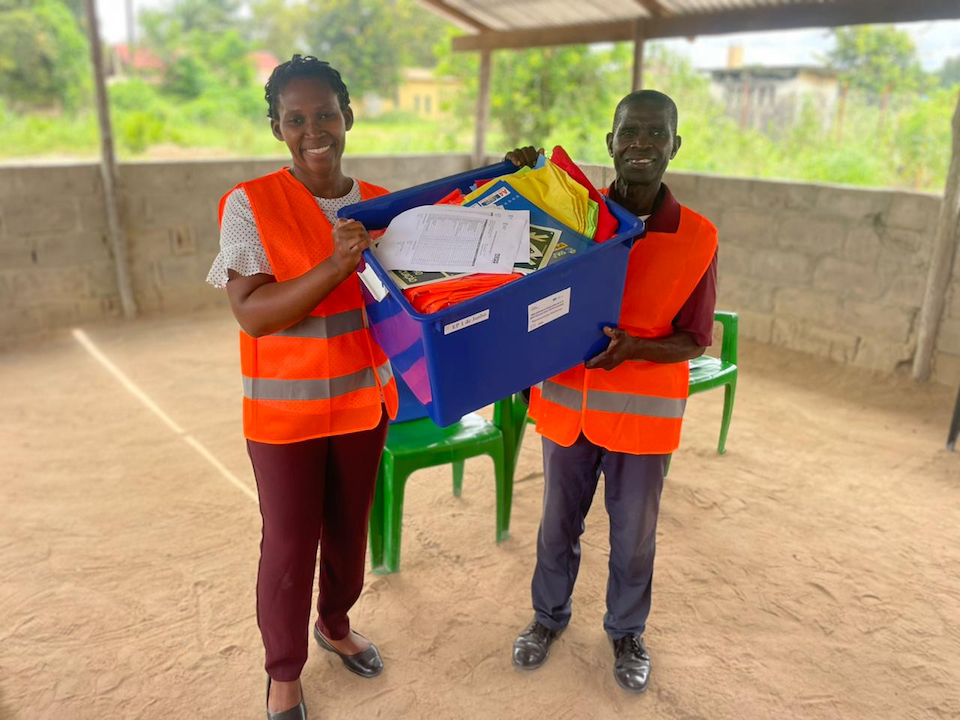
The emergency kits consist of three essential components for the prevention, control, and mitigation of disaster situations: a registration kit, an alert kit, and a first aid kit.